
Choosing dental insurance in Florida can feel confusing when every plan seems to offer different premiums, deductibles, networks, and benefits. One plan may cover preventive care with little out-of-pocket cost, while another may have a waiting period before it helps pay for major dental work.
The right dental insurance in Florida can help you budget for routine dental visits and reduce some of the costs of eligible treatments. However, dental insurance does not usually cover every procedure in full. Understanding the details before you enroll can help you avoid unexpected expenses.
Whether you are buying coverage for yourself, your children, or your entire household, this guide explains how dental plans work, what they cover, how to compare costs, and where to look for coverage in Florida.
What Is Dental Insurance in Florida?
Dental insurance is a type of coverage that helps pay for eligible dental services, such as examinations, cleanings, X-rays, fillings, and certain other treatments. You generally pay a monthly premium in exchange for benefits defined by your policy.
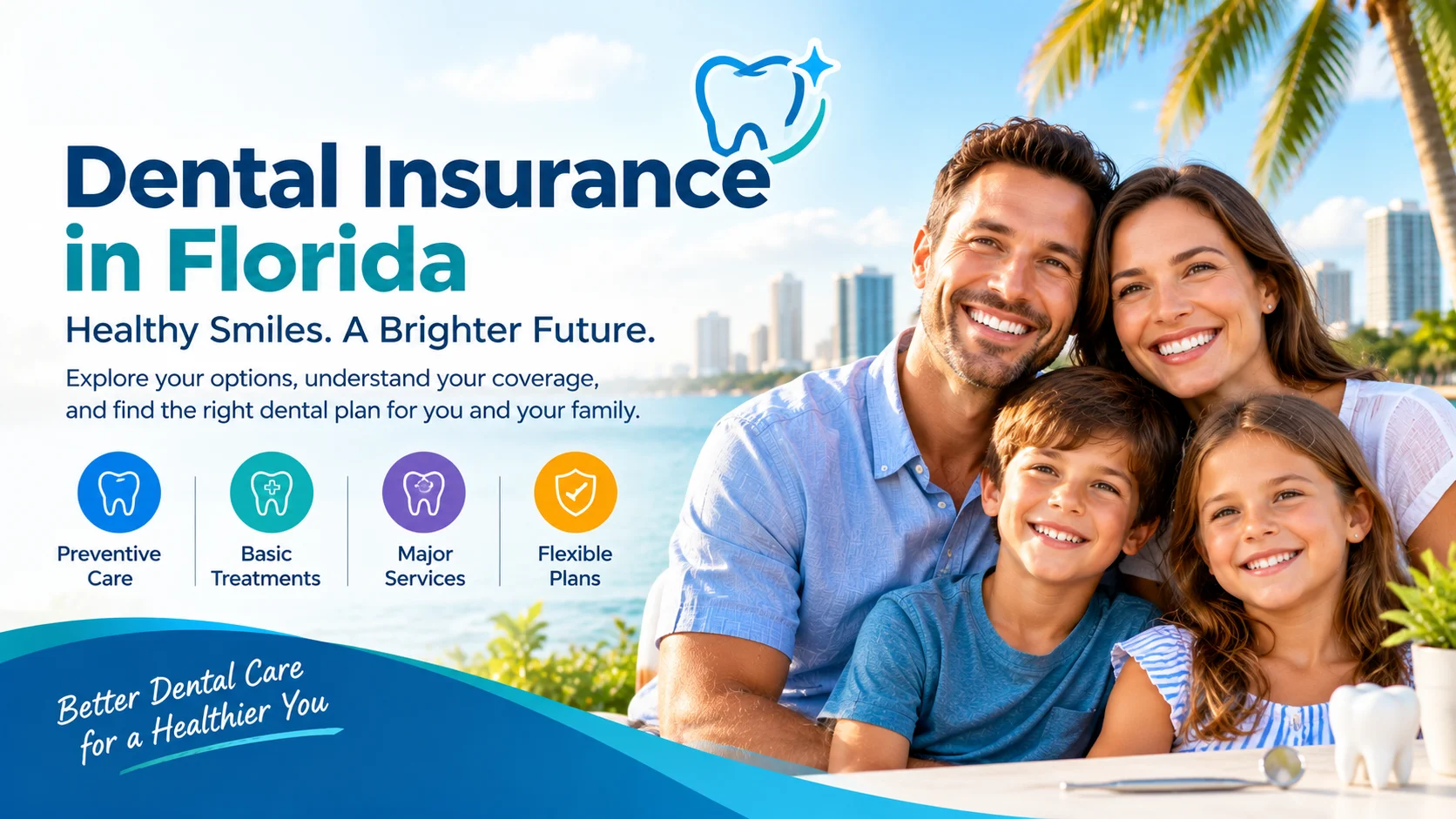
Many plans divide dental care into three categories:
- Preventive care: Routine exams, cleanings, and certain X-rays.
- Basic services: Treatments such as fillings and some extractions.
- Major services: Procedures such as crowns, bridges, dentures, or root canals, depending on the plan.
The exact classification varies by insurer. Some policies cover preventive services at a higher percentage than major procedures, and some apply waiting periods or annual benefit limits.
Dental insurance is separate from comprehensive medical insurance unless dental benefits are included in your health plan. HealthCare.gov confirms that adults can purchase a separate dental plan through the Marketplace when available, while adult dental coverage is not required in every Marketplace health plan.
For Florida residents, the important first step is to identify the type of dental care you expect to need and compare policies based on their actual benefits rather than the premium alone.
Types of Dental Plans Available in Florida
When comparing dental plans in Florida, you will commonly encounter PPO plans, DHMO plans, and discount dental programs. Each works differently, so the best option depends on your preferred dentist, expected treatments, and budget.
1. Dental PPO plans
A Preferred Provider Organization (PPO) plan lets you visit dentists within a contracted network. Many PPO plans also provide some coverage for out-of-network care, although your costs may be higher.
PPO plans may be worth considering if you want more flexibility when choosing a dentist.
Before enrolling, check:
- Whether your current dentist is in-network.
- What you pay for preventive, basic, and major services.
- Whether out-of-network benefits are available.
- Whether deductibles and annual benefit limits apply.
2. Dental HMO or DHMO plans
A Dental Health Maintenance Organization (DHMO) generally uses a network of participating dentists and a schedule of covered services and copayments.
Some DHMO plans have lower monthly premiums than certain PPO options. However, they may offer less flexibility when choosing a provider, and out-of-network services may not be covered except in limited circumstances.
Check the provider directory and service copayments before choosing this type of dental coverage.
3. Dental discount plans
A dental discount plan is not insurance. Members typically pay a fee to access discounted prices from participating dentists.
You generally pay the dentist directly at the discounted rate. The program does not operate like an insurance policy that pays covered claims.
A discount plan may suit someone who wants reduced prices on certain services without traditional insurance, but compare the actual discounts and membership fees before joining.
What Does Dental Insurance Typically Cover?
Dental insurance coverage varies by policy, but many plans provide benefits for preventive care and certain restorative treatments.
| Type of service | Examples | What to check |
| Preventive | Routine exams, cleanings, X-rays | Frequency limits and cost-sharing |
| Basic | Fillings and some extractions | Coinsurance, copayments, and waiting periods |
| Major | Crowns, bridges, dentures, or certain root canals | Benefit percentage, waiting periods, and annual maximum |
| Orthodontic | Braces or other orthodontic treatment | Age restrictions, lifetime limits, and eligibility |
Do not assume every plan covers every service in the table. A root canal, for example, may be classified differently across policies. Orthodontic coverage may be limited or unavailable.
Ask for the policy’s Summary of Benefits and confirm the treatment category with the insurer before committing to a plan.
How Much Does Dental Insurance in Florida Cost?
The cost of dental insurance in Florida depends on the insurer, plan type, county, age, household enrollment, and selected benefits. There is no single premium that applies to every resident.
A low monthly premium may be appealing, but it does not necessarily mean the plan will save you money when you need treatment.
Consider these costs together:
- Monthly premium: The amount you pay to keep the policy active.
- Deductible: The amount you may need to pay before certain benefits apply.
- Copayment or coinsurance: Your share of the cost of a covered service.
- Annual maximum: The maximum amount the insurer pays toward covered dental services during a plan year, when the policy includes such a limit.
- Waiting period: The time you may have to wait before certain benefits become available.
Example: Comparing two hypothetical dental plans
Imagine two plans are available to you.
- Plan A has a lower monthly premium but a longer waiting period for major services and a lower annual benefit maximum.
- Plan B costs more each month but has a higher annual benefit maximum and more favorable coverage for a treatment you expect to need.
If you only need routine cleanings, Plan A may be sufficient. If you anticipate a crown or other major procedure, Plan B may be worth comparing more closely.
These are illustrative examples, not actual quotes or a guarantee of savings. Ask the insurer how your expected treatment would be covered under each policy.
How to Buy Dental Insurance in Florida?
If you want to buy dental insurance in Florida, start by reviewing your current coverage and then compare plans available in your area.
Step 1: Decide who needs coverage
Are you looking for an individual dental plan, coverage for a spouse, or a family plan? If children need orthodontic treatment, check whether the policy covers it and whether age or benefit limits apply.
Step 2: Check your current dental needs
Consider whether you mainly need routine cleanings or expect more extensive work. If your dentist has already recommended treatment, ask the insurer whether that procedure is covered and whether a waiting period applies.
Do not assume a new policy will immediately cover treatment that is already planned.
Step 3: Compare plans and providers
Confirm that your preferred dentist participates in the plan’s network. Review the provider directory and contact the dental office if necessary. Network participation can change, so verify it before enrollment.
Step 4: Read the full benefit details
Compare the premium, deductible, covered services, annual maximum, waiting periods, exclusions, and cost-sharing rules. Check whether the policy has special limits for implants, orthodontics, dentures, or other expensive procedures.
Step 5: Confirm enrollment rules
Florida residents may find dental coverage through an employer, a private insurer, or the federal Health Insurance Marketplace.
HealthCare.gov explains that Marketplace dental coverage can be included in some health plans or offered as a separate dental plan. A separate Marketplace dental plan generally must be purchased alongside a Marketplace health plan. Adult dental policies may have waiting periods, so review the terms before enrolling.
Does Florida Medicaid Cover Dental Care?
Florida Medicaid provides dental benefits, but the services available depend on eligibility, age, the applicable program, and the dental plan’s rules.
Children under 21 may qualify for a broader range of medically necessary dental services, which can include preventive care, fillings, crowns, and orthodontic services when applicable requirements are met. Adult benefits are more limited under the standard state coverage, although certain plans offer additional benefits for eligible members.
Florida Medicaid recipients generally receive dental services through a separate Medicaid dental plan. Check the current benefit list and any prior-authorization requirements before scheduling treatment.
How L. Thomas Insurance Can Help You Compare Dental Coverage?
Choosing dental insurance is easier when you know which details matter most. L. Thomas Insurance serves Florida consumers who want to review insurance options and understand their coverage needs.
When comparing dental plans, consider asking:
- Which plans are available for my location and situation?
- Is my preferred dentist included in the network?
- How are preventive, basic, and major services covered?
- Are waiting periods or annual benefit limits applicable?
- What would I pay for the treatment I expect to need?
L. Thomas Insurance can help you work through these questions and understand the factors to compare. Policy availability, benefits, and enrollment options depend on the insurer and your circumstances.
If you are reviewing several types of protection for your household, you can also read our guide to choosing insurance plans for Florida families.
For assistance with your insurance questions, visit the L. Thomas Insurance contact page.
Conclusion
The right dental insurance in Florida should balance monthly costs, access to dentists, and the benefits you are most likely to use. A plan with a low premium may work well for routine preventive care, while another may be more suitable if you expect restorative treatment.
Before enrolling, compare the provider network, deductible, covered services, waiting periods, annual benefit maximum, and exclusions. Make sure you understand how the policy would handle your likely dental expenses rather than relying on the advertised premium alone.
L. Thomas Insurance can help you review your insurance needs and understand what to ask when comparing coverage options. Take time to evaluate the details so you can make a more informed decision for yourself and your family.
Frequently Asked Questions
1. Is dental insurance required in Florida?
Dental insurance is not generally required for every adult in Florida. However, dental coverage must be available for children age 18 and under who receive Marketplace health coverage, either through a health plan or a separate dental plan. You are not necessarily required to purchase that dental coverage.
2. Can I buy dental insurance without health insurance in Florida?
It depends on where you buy the policy. Some private insurers offer standalone dental insurance independently of medical coverage. However, HealthCare.gov generally requires you to purchase a Marketplace health plan at the same time to buy a separate Marketplace dental plan. Check the enrollment rules for the specific insurer or program.
3. Does dental insurance cover crowns and root canals?
Some dental plans cover crowns and root canals, but coverage depends on the policy. These procedures may be subject to waiting periods, deductibles, coinsurance, annual maximums, or other restrictions. Confirm the coverage for your specific procedure before treatment.
4. When should I buy dental insurance?
Consider reviewing dental coverage before you need major treatment, because some plans impose waiting periods for certain services. Compare the premium against the benefits you expect to use and check whether your preferred dentist participates in the network.
Disclaimer: This article is for educational purposes only and does not constitute an insurance quote or guarantee of coverage. Benefits, premiums, exclusions, waiting periods, and availability vary by policy and insurer. Always review the policy documents before enrolling.
Also Read: Different Types of Life Insurance